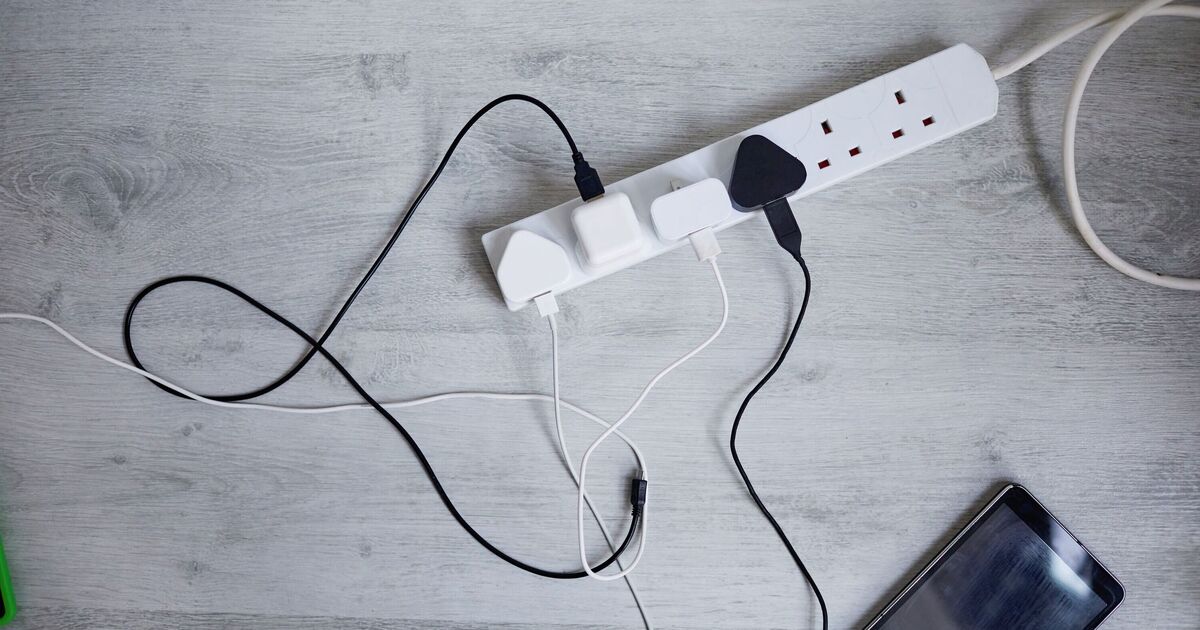
As people start to decorate for Christmas, they may rely on extension leads to power up any lights and decorations that need to be near a socket. However, these devices could lead to a harmful fire if common mistakes are made.
People living in older homes may find themselves struggling to avoid using extension leads to make things work generally, due to having fewer wall sockets. However, professionals have issued an alert about the risks and dangers that can be easily avoided.
A spokesperson for the County Durham and Darlington Fire and Rescue Service said: “Many portable electric items like lamps and radios are supplied with a relatively short length of cable. Ensuring your home has sufficient socket outlets at convenient points will minimise the need for extension leads and adapters, but their use will occasionally be unavoidable.
“An extension lead should not be used whenever it is possible to reach a wall socket with the equipment cable. However, the equipment cable should never be stretched taut as this may cause a tripping hazard.”
People are being urged to bear in mind that, if no other option is possible than to use an extension lead, there are a few ways to improve safety and cut back the risk of an avoidable fire from breaking out. As a precaution, always check that leads, plugs and sockets are undamaged.
The extension lead should be positioned carefully to prevent damage to the cable. If the cable has to cross a pathway, the risk of tripping and damage can be minimised by covering it with a rubber protector strip
The spokesperson added: “Only use extension leads fitted with suitably-insulated connectors and plugs. Never be tempted to join two lengths of flex by twisting the bared ends of wires together, even if you bind them with insulating tape.”
The fire safety specialists claimed: “It is recommended no extension lead be more than 15 metres in length.” This works out at just short of 50ft.
Damaged extension leads should be taken out of use and replaced. Leads cannot be repaired satisfactorily using insulating tape, as it does not have sufficient strength or stickiness, nor does it provide enough physical protection.
Signs you have an overloaded extension lead
Most extension leads are rated at 13A (amps), which works out to about 3,000W (watts) or energy. This means that people should take the time to consider exactly what gets connected to these cables and not exceed the stated limit. You can find an appliance’s wattage by checking the label on the back or bottom of the device, as most appliances have a sticker listing their power consumption
Electrical Safety First claimed there are a few different ways to tell if there is an overloading issue with your sockets or extension leads, such as:
- a smell of hot plastic or burning near an appliance or socket
- sparks or smoke coming from a plug or appliance
- blackness or scorch marks around a socket or plug, or on an appliance
- damaged or frayed leads
- coloured wire inside leads showing at the plug or anywhere else
- melted plastic on appliance casings or leads
- fuses that blow or circuit-breakers that operate for no obvious reason