For decades, NATO’s reserve forces sat at the margins of defence planning, but Russia’s full-scale invasion of Ukraine has forced the alliance to confront a hard reality: its existing approach to reserves was not fit for purpose and didn’t match the scale, speed and complexity of modern collective defence.
Now, allies are all taking steps to boost their reserve numbers – and they’re hoping to attract talent from fields that are becoming increasingly important for victory on and off the battlefield, but which aren’t necessarily competitive salary-wise, including cyber and IT.
“All nations are doing that in a different way, at a different speed, and they have been doing it for the last few years. But it’s picking up momentum, it’s still picking up momentum,” Brigadier General Gilbert Overmaat, chair of the NATO Committee on the Reserves, told Euronews.
As with defence investments in general, European reserve numbers started to decrease in the early 1990s as Europe reaped the so-called “peace dividend” that followed the end of the Cold War.
Then, in 2014, Russia illegally invaded parts of eastern Ukraine and annexed Crimea, prompting allies to commit to hiking defence spending. A second jolt came with the full-scale Russian invasion in 2022.
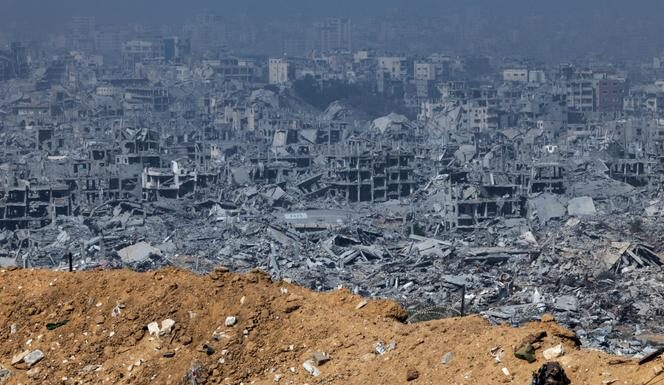
The ongoing war, which will later this month pass the four-year mark, exposed the limits of relying primarily on regular troops and showed the need to adapt to growing operational demands, to project power in new domains such as cyber and space, and to achieve rapid force generation.
Reservists are increasingly seen as crucial to plugging these gaps.
‘Northern and eastern countries are role models’
NATO formally updated its reserve policy in 2023 to align manpower planning with the Alliance’s new Strategic Concept. Its updated policy reflects this shift by emphasising integration rather than separation.
Now, more reservists are taking part in exercises.
“That’s one of the things in the policy: that the biggest benefit is when reserves and regular forces are mixed or working together, when there is a harmonisation of tactics, equipment, training,” Overmaat said.
In several countries, this blending is already becoming routine, while others are still adapting their systems.
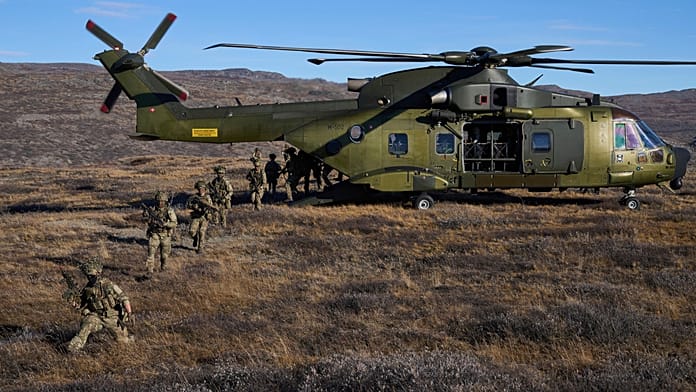
France offers a clear illustration of this approach in practice. The VULCAIN 2025 exercise mobilised 1,000 personnel last September, roughly 80% of whom were reservists. The active duty staff was there to provide a supporting role as well as high-end enablers such as engineering assets, drones and helicopters.
Under its “Reserve 2030” strategic plan, France aims to double the size of its reserves, create mixed units, establish a reservist “cyber battalion”, and boost reservists’ participation in multi-national exercises. This year, the country will also roll out voluntary military service for 18-year-olds.
Germany has also set up a voluntary military service model for 18-year-olds, and aims to build a force of 260,000 active troops and 200,000 reservists by 2035.
What reservists actually do, however, differs from country to country, Overmaat said.
“They’re doing more depending on what is needed in their country, depending on what is politically accepted in that country, and that depends heavily on the socio-economic structures in that country,” he explained. “If the awareness of threats in a country is bigger, then the political will to decide to do things is bigger and there is more movement.”
“In general, I would say that the more northern and eastern countries are role models for others,” he added, praising their mobilisation systems as well as the record they keep on the expertise and competencies of individual reservists.
Estonia’s wartime force structure, for example, is predominantly manned by reservists, who fill roles across the full spectrum of military activity – from infantry and artillery to air defence, cyber, logistics, special forces and senior leadership. These reservists receive their initial training through compulsory conscription, lasting either eight or 11 months, and are then subject to regular refresher training and no-notice snap exercises.
Latvia has taken a different but complementary path. In response to the deteriorating security environment, Riga reintroduced conscription in 2023, with all conscripts entering the reserve after completing 11 months of service.
Lithuania has likewise set ambitious numerical targets, with plans to increase its active reserve from around 33,000 personnel to 51,000 by 2030.
‘Ambassadors for the military’
While the approaches taken by the various allies might differ, there is now a shared understanding that reserves can no longer be treated as a strategic afterthought.
Also new is the breadth of capabilities now expected from reservists. Beyond traditional combat roles, there is growing demand for specialists drawn directly from civilian life –cyber experts, IT professionals, engineers, medics and drone operators – whose skills cannot be generated quickly within the regular force alone.
“That is really something we see, especially after 24 February 2022: there’s a clear uptick in that, a clear interest to come in,” Lieutenant Colonel Kenneth Myrup, then staff officer at NATO International Military Staff, told Euronews.
“People that we would not have seen before having an interest in having a military service next to their civilian job are actually stepping up now and saying, I can do something with the skills that I have from my private life.”
Ministries of defence are also directly talking to companies to source the talent they need, including in logistical, building, transport or finance companies. The pitch is that it’s a win for all involved: the military gets the mass and skills it needs, and the reservists acquire new ones – primarily about decision-making and leadership – that benefit both them and their employer.
But equally important for NATO and European allies is that reservists provide a key link between the military and civilian society and help prepare their fellow citizens against potential threats.
According to various intelligence agencies, Russia could be in a position to attack another European country before the end of the decade. Meanwhile, acts of suspected sabotage of hybrid warfare are carried out on a regular basis across Europe, some of which could potentially wreak havoc on societies without a missile being fired.
But while awareness is rising, the threat is assessed differently across the Old Continent, and civilian preparedness therefore differs widely.
The Baltic and Scandinavian countries tend to have a higher level of civilian preparedness due in part to their geography and history with Russia. But in some countries, the idea that civilians might have to play their part if the worst-case scenarios come to pass remains a very sensitive topic.
That was thrust into the spotlight in France after Chief of the Defence Staff General Fabien Mandon warned that the country must prepare for the possibility of war, and even to “lose our children”, sparking a political and public backlash.
Reservists, Brigadier General Overmatt said, “are an ambassador of the military as well”.
“It’s creating a sense of awareness, it’s talking about resilience in society. It’s not only military capabilities that we need, we also need a resilient society and reservists can build that bridge between the military and society.”