A post on X by European Parliament President Roberta Metsola has triggered a wave of misinformation linked to the EU’s €90 billion support loan to Ukraine, which is designed to help Kyiv meet its general budget and defence needs amid Russia’s ongoing invasion.

ADVERTISEMENT
ADVERTISEMENT
Hungary said earlier this week that it would block both the loan — agreed by EU leaders in December — and a new EU sanctions package against Moscow amid a dispute over oil supplies.
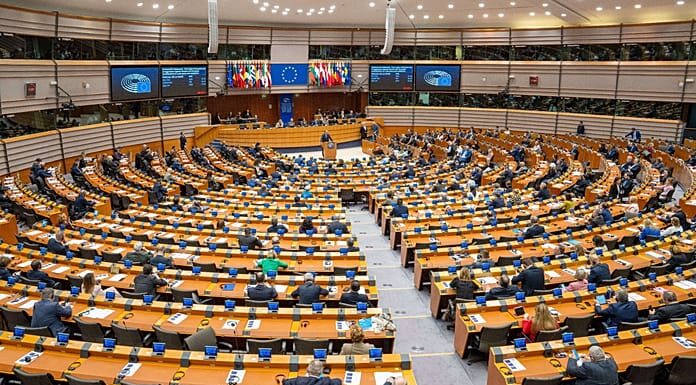
Shortly afterwards, Metsola posted on X that she had signed the Ukraine support loan on behalf of the parliament.
She said the funds would be used to maintain essential public services, support Ukraine’s defence, protect shared European security, and anchor Ukraine’s future within Europe.
The announcement triggered a wave of reactions online, with some claiming Hungary’s veto had been ignored, but this is incorrect.
Metsola did sign the loan on behalf of the European Parliament, but that’s only one step in the EU’s legislative process. Her signature does not mean the loan has been definitively implemented.
How the process works
In December, after failing to reach an agreement on using frozen Russian assets to fund Ukraine’s war effort, the European Council agreed in principle to provide €90 billion to help Kyiv meet its budgetary and military needs over the next two years.
On 14 January, the European Commission put forward a package of legislative proposals to ensure continued financial support for Ukraine in 2026 and 2027.
These included a proposal to establish a €90 billion Ukraine support loan, amendments to the Ukraine Facility — the EU instrument used to deliver budgetary assistance — and changes to the EU’s multiannual financial framework so the loan could be backed by any unused budgetary “headroom”.
Under EU law, these proposals must be adopted by both the European Parliament and the European Council. Because the loan requires amendments to EU budgetary rules, it ultimately needs unanimous approval from all member states.
Metsola’s signature therefore does not amount to a final decision, nor does it override Hungary’s veto.
The oil dispute behind Hungary’s opposition
Budapest says its objections are linked to a dispute over the Druzhba pipeline, a Soviet-era route that carries Russian oil via Ukraine to Hungary and Slovakia.
According to the Centre for Research on Energy and Clean Air (CREA), Hungary and Slovakia imported an estimated €137 million worth of Russian crude through the pipeline in January alone, under a temporary EU exemption.
Oil flows reportedly stopped in late January after a Russian air strike that Kyiv says damaged the pipeline’s southern branch in western Ukraine. Hungary disputes this, with Prime Minister Viktor Orbán accusing Ukraine of blocking it from being used.
Speaking in Kyiv alongside European Commission President Ursula von der Leyen and European Council President António Costa, Ukraine’s President Volodymyr Zelenskyy said the pipeline had been damaged by Russia, not Kyiv.
He added that repairs were dangerous and could not be carried out quickly without putting Ukrainian servicemen in danger.
Tensions escalated further after reports that Ukraine struck a Russian pumping station serving the pipeline. Orbán responded by ordering increased security at critical infrastructure sites, claiming Kyiv was attempting to disrupt Hungary’s energy system.