Increasing pressure on manufacturers to move production to Europe will disrupt existing supply routes and force companies to construct new ones, several industry representatives have told Euronews ahead of EU leaders’ talks on the “European preference” – the European Commission’s controversial proposal to revitalise the bloc’s industry.
Proposed by French Commissioner Stéphane Séjourné, the preference aims to prioritise EU-made products and services in public procurement and to set criteria that favour domestic production within EU supply chains. It is part of the Industrial Accelerator Act, slated to be presented on 25 February after repeated delays.
The plan is part of broader EU efforts to boost competitiveness and protect the market from global competition, mainly from the United States and China. But EU leaders are also seeking to reduce the bloc’s dependency on foreign imports like clean technologies, batteries, steel and other energy-intensive goods.
Several analysts argue that while “Made in Europe” rules aim to secure industrial sovereignty and reduce dependency on imports, they actually risk radically increasing costs for downstream industries like construction and automotive manufacturing.
In a letter sent to EU leaders ahead of an informal retreat on Thursday, Commission President Ursula von der Leyen maintained that a European preference is a “necessary instrument” to create domestic value.
“It can help create lead markets in strategic sectors and support the scaling-up of European production capabilities,” reads the letter, dated 9 February and seen by Euronews.
However, the EU’s chief said any such preference **”**must be underpinned by robust economic analysis and aligned with our industrial priorities, while engaging constructively with trusted partners”.
Leaders from numerous industrial sectors have urged caution to protect existing supply chains and warned against protectionism in a geoeconomic climate where tariffs are already being weaponised.
Automotive
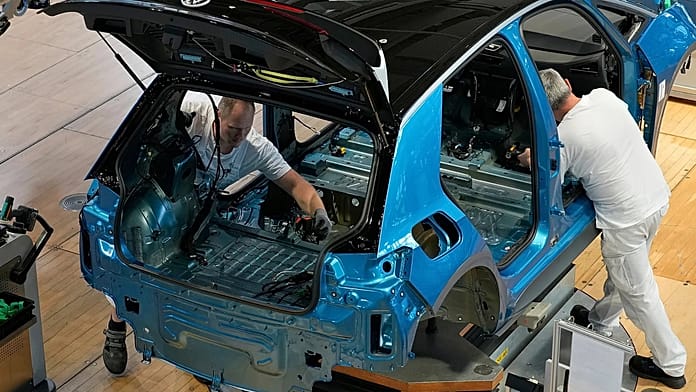
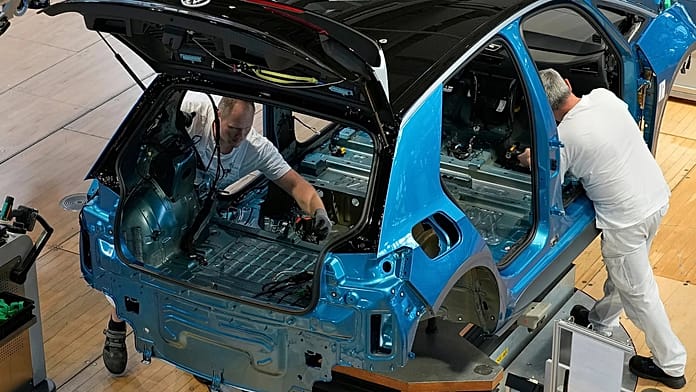
“We are generally critical of local content approaches, as our supply chains are highly intertwined internationally,” a spokesperson from the German Association of the Automotive Industry (VDA) told Euronews.
They added that protectionism “carries the risk of backlash from other countries and could thus backfire, especially for the export-oriented automotive industry, where around 70% of jobs are supported by exports”.
Germany and Europe must be more determined than ever to advocate for open markets, reliable international cooperation, and rule-based trade, the spokesperson said, warning that imposing local content production quotas could increase production costs, undermining the competitiveness both of the European industry and of the EU at large.
CLEPA, the association representing automotive suppliers, published a paper last September with recommendations on European preferences. It suggested introducing a European local content threshold of 70–75% and suggested that “a component could be considered EU-originating if it undergoes its last substantial transformation” in a member state’s territory.
Aviation
Similar concerns have been voiced by the aeronautics industry, which added that many sectors are still trying to understand what Made in Europe actually means.
ASD Europe, which represents the European aerospace, security and defence industry, said the sector is highly reliant on global supply chains and that a European preference criterion would likely affect a leading European industry, which accounts for 40% of the global market.
“The devil is in the details, in how you frame it,” ASD Europe Secretary General Camille Grand told Euronews. “If we think of Cedar Robotics, we’re dealing with a highly globalised supply chain. So it is a little different than a domain where the supply chain or the elements are mostly domestic or European.”
“We need to stay where we are today,” Grand said, adding the sector is supportive of the general idea of promoting the European industry but noting that its “global market share is not a given”.
“We have to be a little more specific, and there might be nuances in how we approach it from a defence perspective or from a civil aviation perspective.”
The clean tech industry, meanwhile, welcomed the upcoming Commission’s plan to prioritise the European industry, but it also called for caution not to isolate the EU from key economic partners who play a crucial part in supply chains for many components spanning several industries, like car parts, batteries, or electrolysers.
“We need to ensure policy drives clear demand signals for strategic clean tech made in Europe, for resilience and competitiveness reasons,” Victor van Hoorn, director at Cleantech for Europe, told Euronews.
“It’s a vital policy tool to scale some of these technologies. It’s not closing the EU to the rest of the world, but merely ensuring taxpayer money translates in demand signals for key technologies made in the EU,” said van Hoorn.
Steel
European steel manufacturers already face higher energy costs and stricter climate regulations than their global competitors, but they generally support increased domestic production.
The European steel industry, Eurofer, said it supports Made in Europe criteria, but urged the EU executive to consider such rules to “cover the entire value chain and not just component assembly”.
“The steel used in components and final products should also be melted and poured in the EU,” Eurofer’s spokesperson told Euronews.
Chemicals
The European Chemical Industry Council told Euronews the Made in Europe criteria can only work if effective criteria are put in place to offer incentives throughout value chains, instead of only incentivising EU production of final products.
“The implementation comes with challenges such as choosing the ‘starting’ points in different value chains that could be necessary for a final product, tracking origin, etc,” a Cefic spokesperson told Euronews.
“Flexibility will be needed to allow for certain production steps taking place out of the EU, temporarily or continuously.”
Cefic suggests including partners outside the EU as eligible for procurement. “Such policies could simultaneously make it more attractive to conclude an agreement with the EU, supporting our negotiations, and may contribute to building alliances and supporting a global approach,” Cefic’s spokesperson said.
Hydrogen
Laurent Donceel, director for transport, industrial policy, and sustainability at trade association Hydrogen Europe, welcomed the Commission’s plan to boost domestic production, calling it a “meaningful step forward”.
“It aligns with the genuine lead‑market strategy that Hydrogen Europe is calling for. It would show a genuine political intent to anchor more industrial value chains in Europe, including for electrolysers,” Donceel told Euronews.
Apart from considering fuel cells and possibly steel, Donceel said, it is crucial for the EU executive to also ensure all other hydrogen technologies, products and fuels will be considered in the future law to make public procurement a key tool for building demand for clean hydrogen.
“Clearly, we need political support for retaining industrial value chains in Europe, notably via public financing and funding tools,” Donceel said.