NEWYou can now listen to Fox News articles!
A top Iranian security official was spotted in Oman just days after Tehran and the U.S. held indirect nuclear talks in the Mideast sultanate.
Ali Larijani, a former Iranian parliament speaker who now serves as the secretary to the country’s Supreme National Security Council, was likely in the country to discuss what comes next after the initial round of talks, The Associated Press reported. The outlet noted that Larijani’s team shared photos of him with Omani Foreign Minister Badr al-Busaidi, the chief intermediary in the U.S.-Iran talks.
Iranian media reportedly said Larijani would deliver an important message, but later state television said al-Busaidi “handed over a letter” to the Iranian official without elaborating on the letter’s origins, according to the AP.
IRAN VOWS TO ‘TARGET US BASES’ IF AMERICAN FORCES LAUNCH AN ATTACK: REPORT
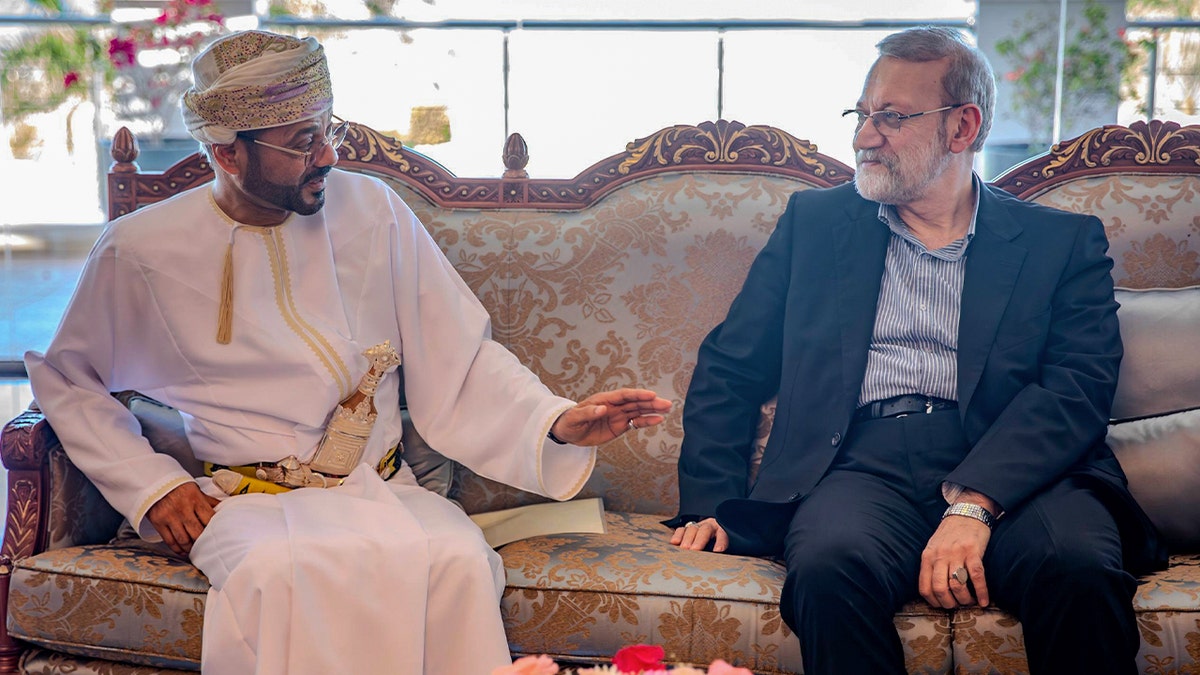
Secretary of the Supreme National Security Council Ali Larijani, right, listens to Omani Foreign Minister Badr al-Busaidi during their meeting in Muscat, Oman, Tuesday, Feb. 10, 2026. (Erfan Kouchari/Iran’s Supreme National Security Council Office via AP)
While in Oman, Larijani also met with Omani Sultan Haitham bin Tariq for nearly three hours, according to the AP, which cited the Iranian state-run IRNA news agency. Additionally, the outlet said that Larijani was set to travel to Qatar, which houses the U.S. military installation that bombed Iran’s nuclear sites in 2025.
Larijani accused Israel of playing a “destructive role” in the talks just before Israeli Prime Minister Benjamin Netanyahu‘s expected visit to Washington, D.C.
“Netanyahu is now on his way to the United States. Americans must think wisely and not allow him, through posturing, to imply before his flight that ‘I want to go and teach Americans the framework of the nuclear negotiations.’ They must remain alert to the destructive role of the Zionists,” Larijani wrote on X.
Israel and Iran engaged in a 12-day war in the summer of 2025 which culminated in the U.S. bombing Tehran’s nuclear facilities. Iran, which has been grappling with mass anti-government protests, has blamed Israel and the U.S. for various grievances.
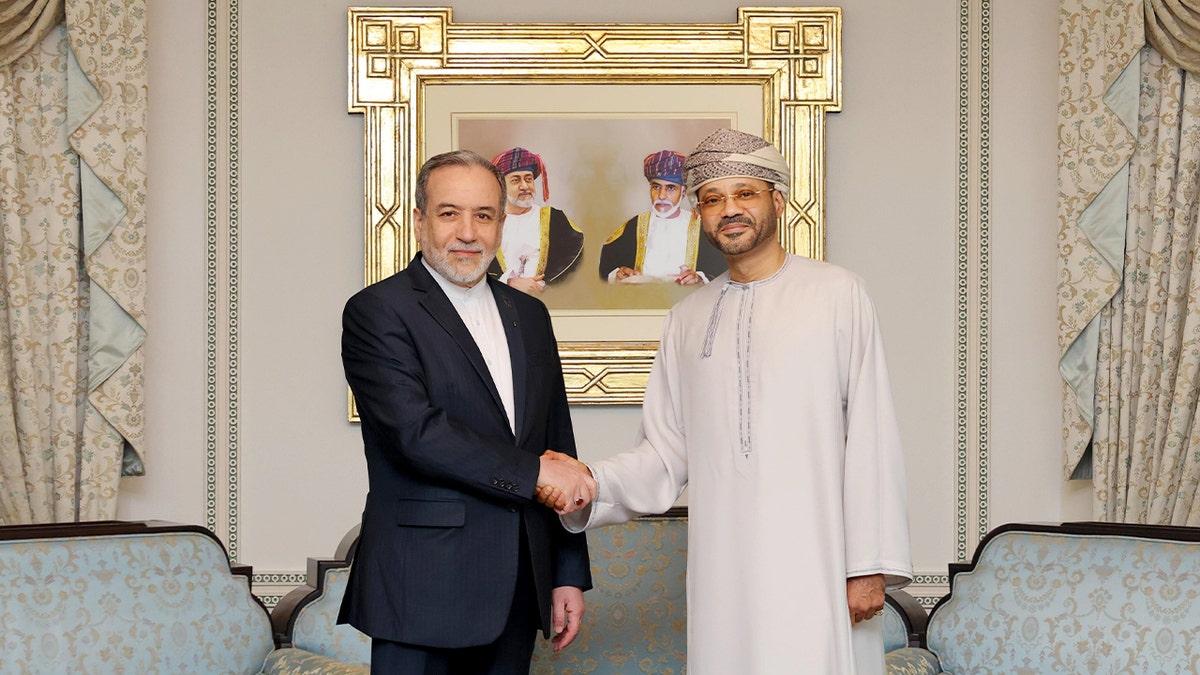
Omani Foreign Minister Sayyid Badr Hamad Al Busaidi meets with Iranian Foreign Minister Abbas Araghchi ahead of U.S.-Iran talks in Muscat, Oman, on Feb. 6, 2026. (Oman Foreign Ministry/Anadolu via Getty Images)
Officials from both the U.S. and Iran have said that the first round of talks went well and suggested that they would continue.
“The Muscat meeting, which was not a long one, it was a half-day meeting. For us, it was a way to measure the seriousness of the other side, and to find out how we could continue the process. Therefore, we mostly addressed the generalities,” Iranian Foreign Ministry spokesman Esmail Baghaei said at a news conference Tuesday in Tehran, according to the AP.
“Our principles are clear. Our demand is to secure the interests of the Iranian nation based on international norms and the Non-Proliferation Treaty and peaceful use of nuclear energy,” Baghaei said, according to the AP. “So as for the details, we should wait for the next steps and see how this diplomatic process will continue.”
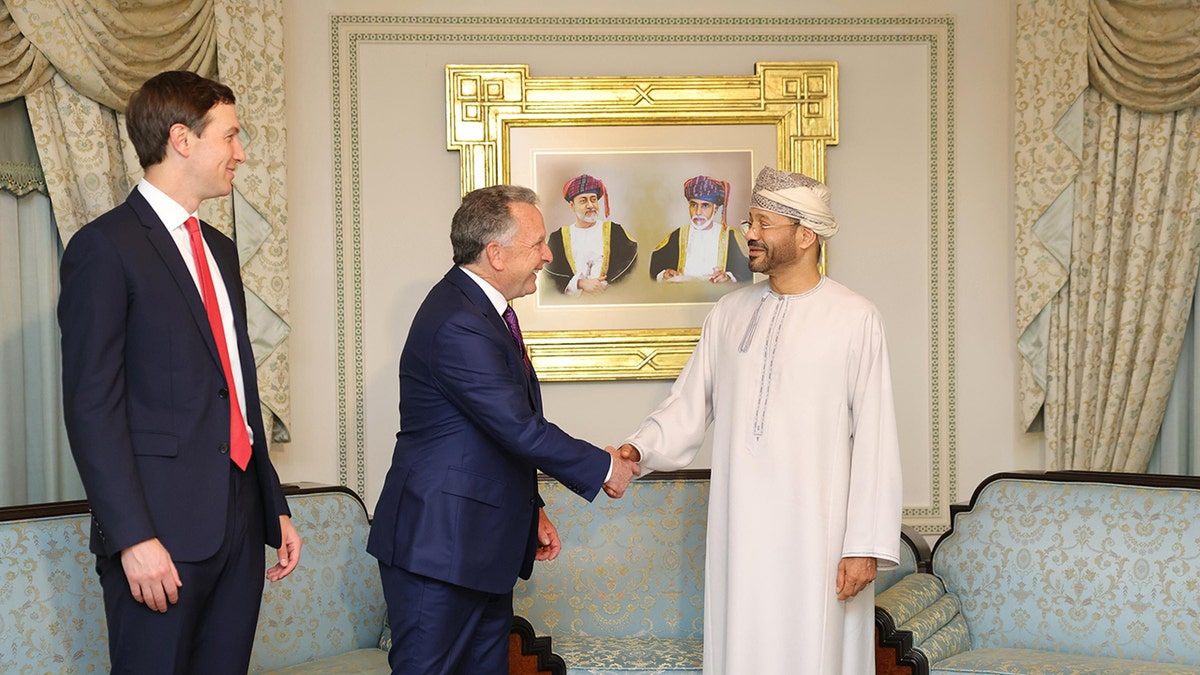
Omani Foreign Minister Sayyid Badr Hamad Al Busaidi, special envoy Steve Witkoff and negotiator Jared Kushner meet ahead of the U.S.-Iran talks, in Muscat on Feb. 6, 2026. (Oman Foreign Ministry/Anadolu via Getty Images)
SATELLITE IMAGES REVEAL ACTIVITY AT IRAN NUCLEAR SITES BOMBED BY US, ISRAEL
Iranian Foreign Minister Abbas Araghchi said indirect nuclear talks with the U.S. in Oman were “a good start” and that there was a “consensus” that the negotiations would continue.
“After a long period without dialogue, our viewpoints were conveyed, and our concerns were expressed. Our interests, the rights of the Iranian people, and all matters that needed to be stated were presented in a very positive atmosphere, and the other side’s views were also heard,” Araghchi said.
“It was a good start, but its continuation depends on consultations in our respective capitals and deciding on how to proceed,” he added.
President Donald Trump also expressed optimism about the indirect talks, telling reporters aboard Air Force One on Friday that “Iran looks like it wants to make a deal very badly. We’ll have to see what that deal is.”
When he was pressed on how long the U.S. would be willing to wait to make a deal with Iran, the president indicated some flexibility, saying he believes the two nations can reach an agreement.
“It can be reached. Well, we have to get in position. We have plenty of time. If you remember Venezuela, we waited around for a while, and we’re in no rush. We have very good [talks] with Iran,” Trump said.
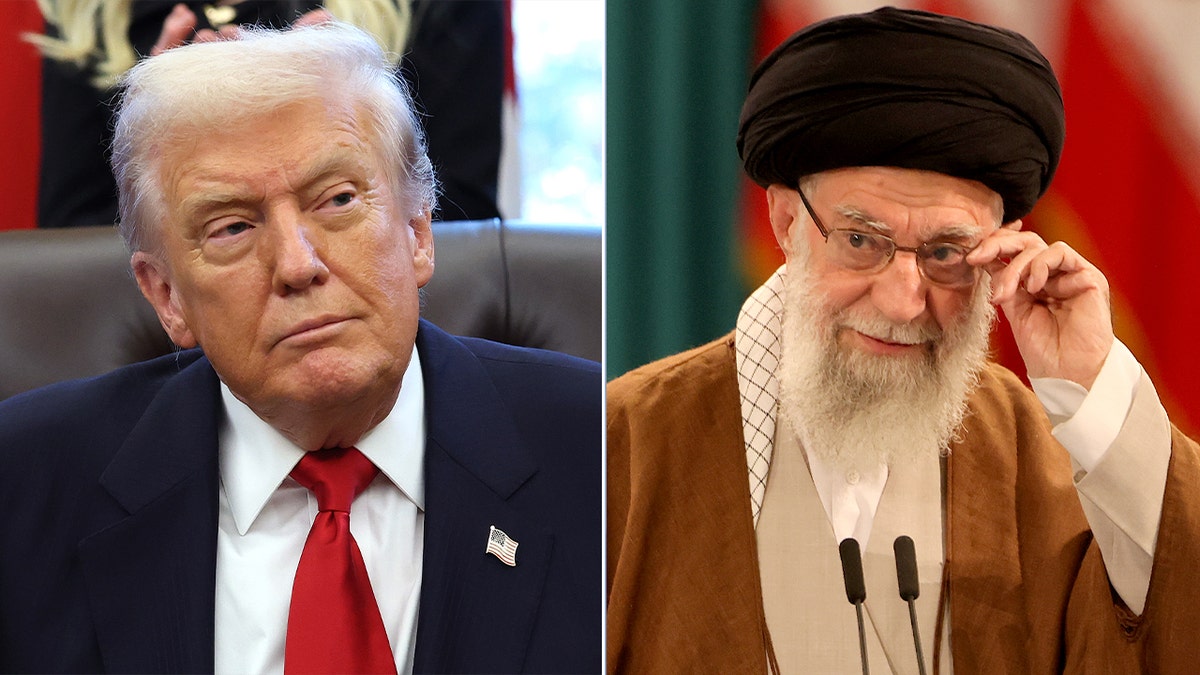
President Donald Trump said indirect nuclear talks with Iran were “very good” and that Tehran “wants to make a deal very badly.” (Anna Moneymaker/Getty Images; Atta Kenare/AFP via Getty Images)
CLICK HERE TO DOWNLOAD THE FOX NEWS APP
“They know the consequences if they don’t make a deal. The consequences are very steep. So, we’ll see what happens. But they had a very good meeting with a very high representative of Iran,” the president added.
American and Iranian representatives held separate meetings with Omani officials on Friday amid flaring tensions between Washington and Tehran. Oman’s Foreign Ministry said the meetings were “focused on preparing the appropriate conditions for resuming diplomatic and technical negotiations.”
The Associated Press contributed to this report.