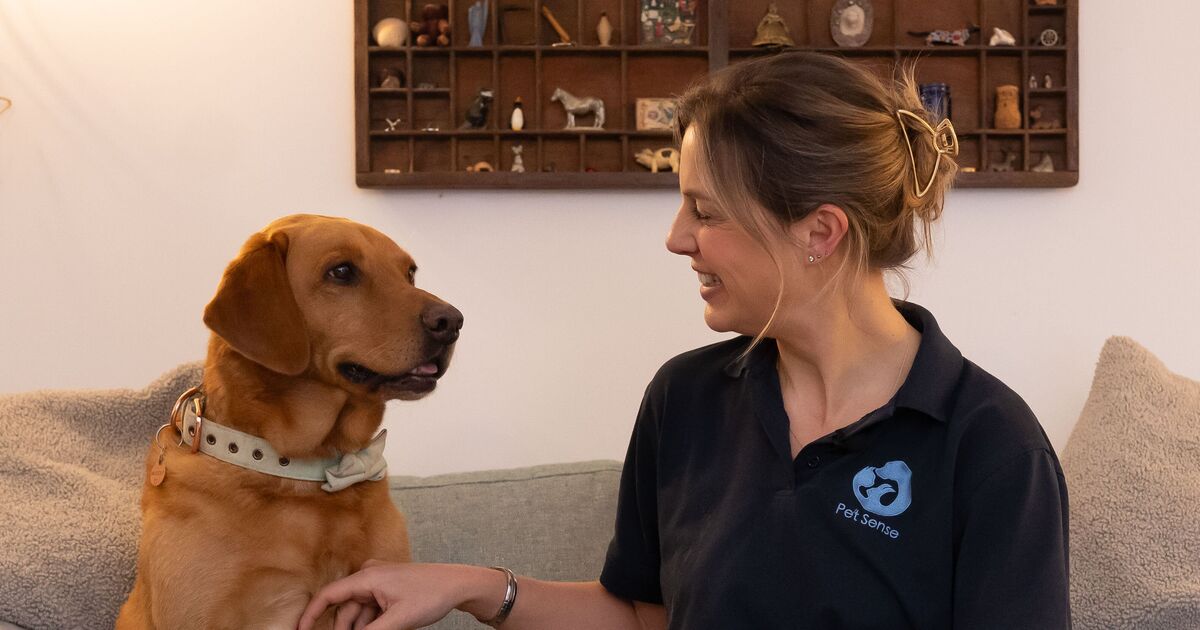
A dog expert has shown that you absolutely can teach an old dog new tricks. Clinical animal behaviourist Rosie Bescoby has revealed five simple techniques to encourage your beloved pet to embrace new challenges.
According to Rosie, who has over two decades of experience working with dogs, contrary to popular belief older dogs never truly lose their ability to learn something new. She explained that providing an elderly pet with new challenges can help their mental wellbeing and strengthen the bond between the dog and their owner, rekindling the emotional connection that can be lost in the ageing process.
“Where they might not be able to get as much physical exercise as they used to, we’re keeping their lives stimulated and enriched by doing so,” Rosie said, who collaborated with lifetime pet insurance provider Petgevity.
“People often assume older dogs are stuck in their ways and that their minds have deteriorated, perhaps because they’ve slowed down physically. However, this doesn’t mean they’re incapable of learning new things.
“Teaching a completely new skill, such as a trick, is very different from attempting to change an unwanted behaviour.”
Among the tricks the experienced behaviourist suggests are the timeless ‘spin’ command, or teaching a nose-to-hand touch – particularly useful for elderly dogs experiencing hearing difficulties, giving them an opportunity to react to a visual recall cue.
According to Rosie, the secret to success is understanding what motivates your dog and using that as a reward. For some dogs, part of their regular dinner would work.
However, something like a steak might excite them too much causing them to lose their focus.
Many dogs will respond well to a favourite or new toy, so the initial step is to assess your pet and determine what approach might be most effective before embarking on the training.
Rosie explained: “While some breed builds will be less physically suited to certain tricks, there’s no reason why dogs of any breed can’t learn something new.”
A spokesperson from Petgevity, which offers policies for animals of any age and covers most pre-existing health conditions with their lifetime plus policies, added: “Rosie has revealed that there is very much life in the old dog yet. With these simple-to-execute tricks hopefully bringing you and your older pooch even closer together.
“We want to celebrate older dogs, regardless of their limitations, and show there’s still so many ways owners can enrich their lives – and your pet might just surprise you, too.
“There is perhaps an element of ageism when it comes to animals, and in fact within the wider industry when it comes to pet insurance, but we’re here to stand with our older four-legged friends and help them live longer and healthier lives.”
ROSIE’S FIVE TRICKS TO TEACH YOUR OLDER DOG
Nose to Hand Touch:
Place a treat between your fingers and hold out an outstretched hand. When you want your dog to come to you, lower your hand to their level. Do these three to five times before removing the treat, and then they should do so without.
Once they get the hang of it, you can do this from further and further away as well as in other environments. This is particularly good for dogs who are hard of hearing as it’s a good visual recall cue.
Middle Position:
This is where you can lure your dog to walk behind you then back through your legs – this is particularly good for a furry friend who struggles to sit. Using your pet’s preferred lure, have them follow your hand around the back of your legs, then swap the lure into your other hand to guide them through the middle of your legs.
When they’re getting the hang of it, still position your hand in the same way, just without a lure or treat, and they should follow it.
Spin:
An old classic, lure your dog with a treat or toy in a circular motion at their pace. Consider their physical limitations and gradually introduce the verbal cue “spin” and widen the circle if required to give them enough space to turn properly. Remove the lure once they’ve got the hang of it but position your hand as if you still have it.
Shake:
Dogs already know how to do this, so this is about adding a verbal cue to get them to perform the action. Ruffle your dog’s coat, if they’re happy for you to do so, and say the word “shake” when you predict they’re about to do it.
Once they do this regularly, they should do so when you give them the verbal cue, which is practical for dogs of all ages.
Go to Bed:
It’s important to frame your dog’s bed as a positive place to be that they want to bound into – so put a treat in your furry friend’s bed each time and then use the verbal cue of “bed”.
Once they get the hang of hopping into bed, increase the distance they have to travel to make it more of a game, which in turn reinforces long term to your dog that it’s a great place to be and not a negative.