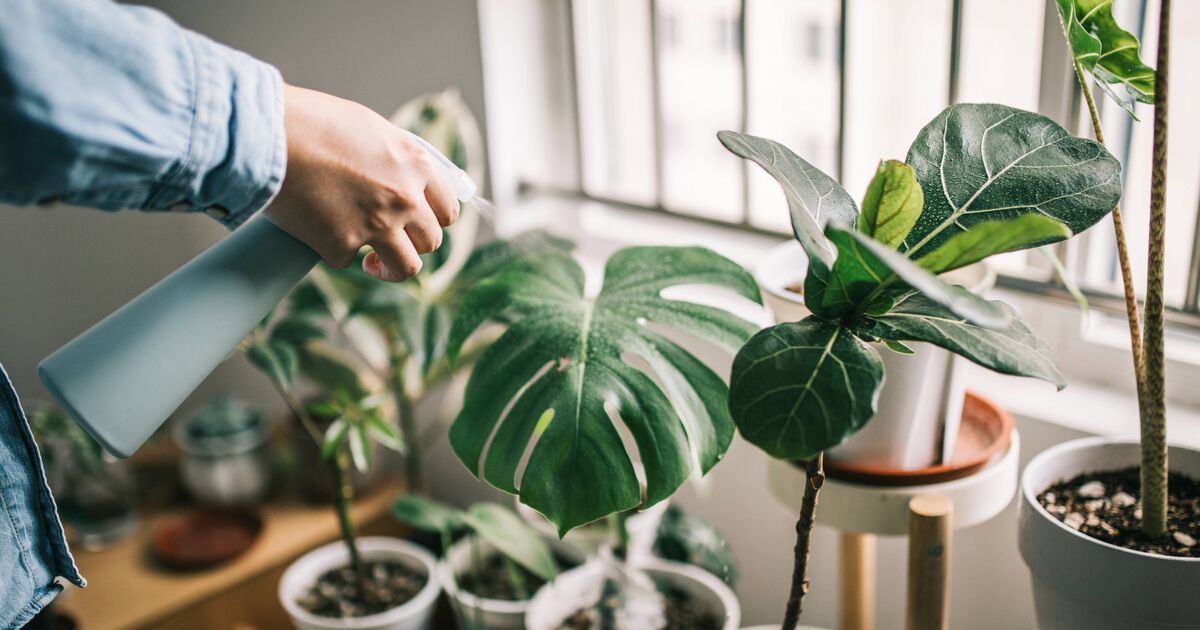

Your plants need care over winter (Image: DuKai photographer via Getty Images)
Google searches for “best houseplants for beginners” have seen a 350% increase over the past five years, as Brits increasingly transform their homes into verdant havens. Barratt Homes delved into the last five years of UK Google Search data to reveal the nation’s favourite plants.
In collaboration with gardening expert Lucie Bradley from Easy Garden Irrigation and Helen Nyul, group head of biodiversity at David Wilson Homes, they’ve produced a comprehensive guide on houseplant care. The guide includes advice on safeguarding your houseplants from central heating, top plant choices for each room in your home, and essential care tips along with common mistakes to avoid.
How heating affects your houseplants
What harm can heating do?
Helen explained: “Central heating removes humidity from the air, which leads to dehydration. Plants lose moisture faster through their leaves, causing them to dry out and pull water from their roots more quickly. This can result in scorched leaf edges, curling, wilting, and leaf drop. Some plants may even stop growing altogether if they’re too stressed.”
Why does this occur?
Helen added: “Heating systems blow out warm, dry air, and if your plant is near a vent or radiator, that air can reach temperatures far higher than the plant can tolerate. Even tropical species, which enjoy warmth, don’t do well with fluctuating heat or dry conditions. The problem isn’t just the temperature; it’s the lack of humidity that comes with it.”
Are some plants more susceptible than others?
Helen explained: “Definitely. Plants with thin, delicate leaves like ferns, calatheas and maidenhair ferns are particularly vulnerable. They rely on higher humidity to keep their foliage lush.
“Succulents and cacti are a bit more tolerant of dry air, but even they can suffer if they’re placed too close to a direct heat source. Orchids, peace lilies, and spider plants also tend to show stress quickly in heated rooms.”
How can we safeguard our plants?
Helen advised: “The best thing you can do is reposition them. Move plants away from radiators, heaters, and vents, ideally at least a few feet away. Grouping plants helps create a mini microclimate with higher humidity, and placing them in naturally humid rooms like the kitchen or bathroom can help too.
“A humidifier is a great investment, but you can also increase humidity by placing bowls of water near heat sources, misting plants regularly, or setting pots on trays filled with pebbles and water. Finally, cut back slightly on watering and feeding as most plants slow down in winter and don’t need as much.”

Indoor plants can be vulnerable (Image: Pexels)
Read more: RHS Chelsea expert explains what’s wrong with your roses
Read more: Orchids bloom ‘like never before’ using kitchen scrap
What if a plant is already damaged?
Helen said: “If your plant is showing brown tips or crispy leaves, trim away the damaged areas and move it to a cooler, more humid spot right away. Hold off on fertiliser and focus on giving it stable conditions, consistent moisture, and time to recover.
“You can also lightly mist or wipe the leaves to remove dust and improve their ability to photosynthesise. With patience and a bit of care, most plants will bounce back by spring.”
The most frequent plant care blunders
Whilst there has been a surge in plant ownership across British households, there are widespread misunderstandings regarding proper plant maintenance.
Watering problems
Lucie explained: “Overwatering is a very common issue, with many people assuming houseplants require frequent watering. This can cause root rot and fungal issues since the plant is sitting in soggy, water-logged soil all day. Common signs of this are yellowing leaves, mould and fungal growth, and mushy-to-the-touch stems.
“Underwatering however, starves the plant of moisture, causing stunted growth and even death. The tell-tale signs for this are dry/crispy leaves, wilting stems, and soil shrinkage (where it pulls away from the side of the pot).”
Soil complications
Lucie explained: “Soil health greatly affects the growth and health of a plant, but different plants require different mixes to help with drainage and airflow.”
Multi-purpose: a lightweight and airy blend that enables superior drainage and air movement around the roots. These combinations frequently feature a mixture of components such as compost, perlite, and vermiculite.
Aroid: a chunkier blend incorporating a greater proportion of compost and worm castings, enabling surplus water to drain rapidly. It contains bark and perlite to form air pockets that facilitate root aeration – vital for tropical plants.
Succulent: a fine mixture featuring coarse sand to promote enhanced drainage and root aeration. This proves particularly crucial for desert-dwelling species such as cacti and succulents.

Central heating can draw moisture out of the air (Image: Alistair Berg via Getty Images)
Potting pitfalls
Containers must feature drainage holes at the base to prevent water accumulation and subsequent root rot.
Lucie explained: “You also may need to repot your plant if it grows out of its current pot size. Notable signs of this include the roots circling the bottom of the pot or even growing out of the drainage holes at the bottom.
“The best time of year to repot is during the springtime, as during autumn and winter, plants enter their dormant phase and are less likely to recover. Choose a new pot that is only one or two inches wider than its previous pot and use fresh soil.”
The 10 most sought-after houseplants across the UK
Snake Plant – 2,133,000 searches
Claiming the title of Britain’s most searched-for houseplant, the Snake Plant has established itself as both fashionable and functional.
Lucie explained: “These plants are best known for their air-purifying qualities by removing common toxins from the air and releasing oxygen. They are also low-maintenance and can thrive with minimal care. However, they can be toxic if ingested and so may be unsuitable for households with pets and small children.”
Spider Plant – 2,088,000 searches
Coming in a close second, Spider Plants are considered an excellent choice for beginners, making them an increasingly popular addition to homes, with yearly searches rising by 20%.
Lucie said: “They are also resilient and known for their easy-care nature, so if you forget to water them, they should bounce back. They are best known for producing ‘spiderettes” or plantlets on long stems, resembling spiders on a web.”
Peace Lily – 2,061,000 searches
Known for their elegant white blooms and glossy leaves, Peace Lilies are as calming as they are practical; however, they are not pet-safe.
Lucie said: “These plants are great for their ability to purify the air in humid spaces like bathrooms. They are also popular for their relatively low-maintenance care and their ability to thrive in various indoor conditions.”
Aloe Vera – 1,827,000 searches
More than just a pretty succulent, Aloe Vera plants can also double up as a natural first-aid kit.
Lucie said: “They are an easy-to-care-for succulent that is also popular for their ornamental value and ability to thrive indoors with minimal maintenance. They are also known for their medicinal properties thanks to the soothing gel found in their leaves.”
Devil’s Ivy – 981,000 searches
Devil’s Ivy, more commonly recognised as Golden Pothos, is regarded as among the finest beginner plants for novices. It has also soared in popularity with searches rising by 32% year-on-year.
Lucie explained: “They are considered one of the easiest plants to grow and care for, making them great for forgetful plant parents. They can handle both a brightly-lit and shaded location as well as a higher humidity environment like bathrooms.”
The Money Tree – 892,000 searches
With its distinctive plaited trunk and reputation for bringing prosperity and fortune, the Money Tree has emerged as a decorative favourite in households.
Lucie said: “These are another low-maintenance choice for households that thrive in indirect light and require watering only when the soil is dry. They also require pruning to maintain their shape and encourage new growth from these cut points.”
Jade Plant – 844,000 searches
Jade Plants represent the second succulent to feature in the top ten list and are particularly praised for their air-purifying qualities.
Lucie revealed: “They are fantastic at improving a room’s air quality by absorbing toxins and releasing oxygen, especially at night. They are also easy to care for since they thrive in bright, indirect sunlight and are drought-tolerant, meaning they can survive periods without watering.”

Some are more susceptible (Image: Kseniya Ovchinnikova via Getty Images)
Chinese Money Plant – 818,000 searches
Recognised for their distinctive circular, coin-shaped leaves, these compact houseplants prove a favourite choice across the globe.
Lucie remarked: “They are easy to take care of, making them popular worldwide. They are also known to bring their owners wealth and good luck. Just make sure they have well-draining soil and only water them when the top inch of the soil is dry to avoid any root rotting.”
Gardenia Flowers – 675,000 searches
The flowering gem on the list, Gardenia Flowers are celebrated for their aromatic white blossoms.
Nevertheless, as Lucie outlined: “They can be slightly trickier plants to grow indoors since they need to be kept consistently moist but not soggy. They also need to be placed in a high-humidity location where the temperature cannot fluctuate from any excessive sunlight or drafts.”
Christmas Cactus – 669,000 searches
Completing the top ten is a seasonal favourite, the Christmas Cactus, celebrated for its vibrant winter blooms.
Lucie advised: “You should place them in a location that provides bright, indirect light and moderate humidity. Interestingly, their blooms are triggered by cooler temperatures and long nights. During this time, you should ‘rest’ your plant by reducing its watering to encourage bud formation.”
The advantages of having indoor plants
Helen Nyul, group head of biodiversity at David Wilson Homes, said: “Houseplants aren’t just pretty décor; they’re little wellness boosters that work quietly in the background. Previously conducted research shows that surrounding yourself with greenery can lift your mood (a welcome bonus in the darker winter months), ease stress and even give your productivity a boost – perfect if you’re working from home.”
“But their benefits don’t stop there. Plants act as natural air purifiers, helping to filter out pollutants like carbon dioxide and nitrogen oxides. They also increase humidity levels indoors, which can help keep pesky winter sore throats, dry skin, and even viruses at bay. In other words, a few leafy companions can make your home healthier, fresher, and a whole lot more inviting.”
Barratt Homes surveyed 1,000 UK homeowners on their knowledge and care habits regarding houseplants. It also collected and analysed UK Google Search data from the last five years to identify any trending queries and most-searched for houseplants.